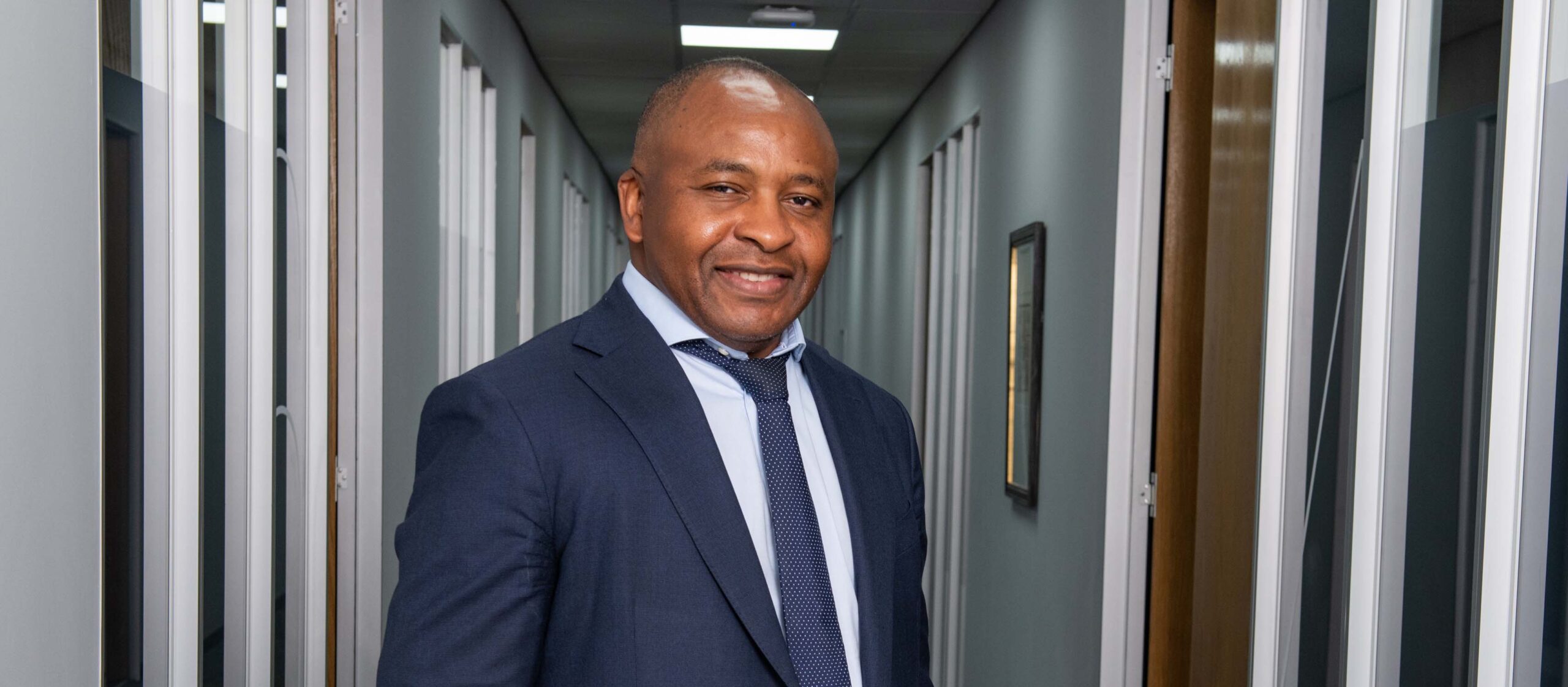
For years, the financial-advice profession has been edging toward a digital transformation. According to Partner and Head of Financial Services Sector at KPMG Southern Africa, Auguste Claude‑Nguetsop, advisers are entering a new era defined not by competition between humans and machines, but by their convergence.
“The role of a financial adviser is moving into one that requires a solid understanding of where and when to use artificial intelligence and digital infrastructure to best serve customers,” he explains. Automation, data analytics and integrated digital platforms are no longer niche tools; they are now baked into the everyday mechanics of advice. Client acquisition, onboarding, record-keeping, risk assessment and portfolio execution increasingly run through platform-based fintech ecosystems designed to streamline operations and reduce costs.
But even as these technologies mature, Claude-Nguetsop is clear about where humans remain irreplaceable. High-end advisory services – the kind requiring deep customisation, contextual decision-making and emotional intelligence – still depend on a human in the loop. “Human advice remains critical,” he says. “Human intervention is key in confirming that the decision-making process done using artificial intelligence is optimal and benefiting from the latest market information.”
AI as amplifier, not autopilot
One of the most transformative shifts is AI’s ability to crunch huge volumes of data and offer hyper-personalised financial solutions. The promise is powerful: sharper insights, more precise risk modelling, and customised recommendations delivered at scale. But Claude-Nguetsop stresses that these systems can’t run unattended.
“AI tools require continuous maintenance and development, including a human feedback loop,” he explains. Without that iterative refinement, models risk drifting away from reality, which is a vulnerability with real financial consequences.
He points to traders on global investment-banking floors as an example of how AI should ideally operate. Sophisticated algorithms help them optimise asset selection, calibrate portfolio allocations, and assess tail risks such as the low-probability, high-impact shocks that can rattle markets. Yet, the machines don’t call the shots alone. “The human touch is still needed to monitor the portfolio and make real-time adjustments,” says Claude-Nguetsop. Advisers must remain aware of AI’s known limitations: over-confidence, hallucinations, estimation errors, and the inability to intuitively interpret unstructured, fast-moving events.
In other words, advisers are shifting from being the primary generators of all analysis to becoming expert supervisors, interpreters and strategic decision-makers. AI is the amplifier – not the autopilot.
The rise of integrated advice ecosystems
As financial services become increasingly platform-driven, advisers are entering a world where entire client journeys, from onboarding to reporting to portfolio management, happen within a single interconnected digital ecosystem. These systems, Claude-Nguetsop notes, are reshaping traditional workflows and client interactions.
“The integrated ecosystem model enables the provision of end-to-end services without the need to jump from one platform to another,” he explains. This seamlessness will push advisers to differentiate themselves in new ways. When every adviser has access to similar digital tools, excellence becomes less about the platform and more about the expertise applied through it.
That means sharper product selection, more sophisticated portfolio construction, stronger tail-risk assessment, and deeper research into alpha generation. “The platform will become a commodity,” he says. “The ability to optimise the functionality of the platform will become critical.” For advisers, mastery of technology needs to be part of the core skill set.
New era, new risks
The opportunity created by AI and fintech is also matched by a new category of risks. Claude-Nguetsop highlights several that advisers must take note of and continue to monitor closely:
- Portfolio crowding – As more advisers rely on similar models, portfolios risk converging on the same strategies, creating liquidity and exit challenges during market stress
- Model and algorithmic errors – From hallucinations to incorrect estimations, AI can produce flawed outputs with significant consequences
- Market manipulation at scale – Bad actors can potentially weaponise automated systems or exploit model blind spots
- Heightened cyber-fraud risks – AI enables more sophisticated attacks, from deepfakes to automated phishing
- Data-privacy vulnerabilities – As more client information flows through digital platforms, compliance demands grow sharper.
These emerging risks underscore why advisers cannot abdicate judgement to machines. The future of advice requires not only adoption of technology but rigorous oversight of it.
The adviser of tomorrow must be hybrid
The new profile of the financial adviser is one who blends traditional advisory expertise with technological fluency. According to Claude-Nguetsop, several capabilities will define relevance in the next decade:
1. Proficiency with generative and agentic AI platforms
Advisers must understand both the power and the limitations of the AI tools they deploy.
2. Basic programming literacy
Not to code entire systems, but to execute routine functions, manipulate data and customise tools in the same way spreadsheets once revolutionised workflows.
3. Awareness of industry-shaping technologies
From blockchain to advanced analytics, advisers must stay ahead of the platforms their clients increasingly expect them to use.
4. Strength in behavioural guidance
The more technology automates the mechanical tasks of advice, the more clients will value empathy, context and human judgement.
Ultimately, Claude-Nguetsop believes the future belongs to advisers who can synthesise technology and human insight and not choose between them. “AI will transform financial services,” he says, “but it will be most powerful in the hands of professionals who understand how to guide it.”
The industry may be stepping into a digital age, but the adviser remains the translator, the steward and the strategic compass. In a world of intelligent machines, human wisdom still sits firmly at the centre of great advice.
Subscribe to our free newsletter
Stay at the forefront of financial advisory excellence with MoneyMarketing's weekly insights. As a professional adviser, you'll receive carefully curated content that enhances your practice and client relationships without cluttering your inbox. Our commitment to delivering only relevant, actionable intelligence helps you make informed decisions that drive your business forward. Join our community of leading financial professionals today and transform your practice with our complimentary newsletter—because your success is our priority.