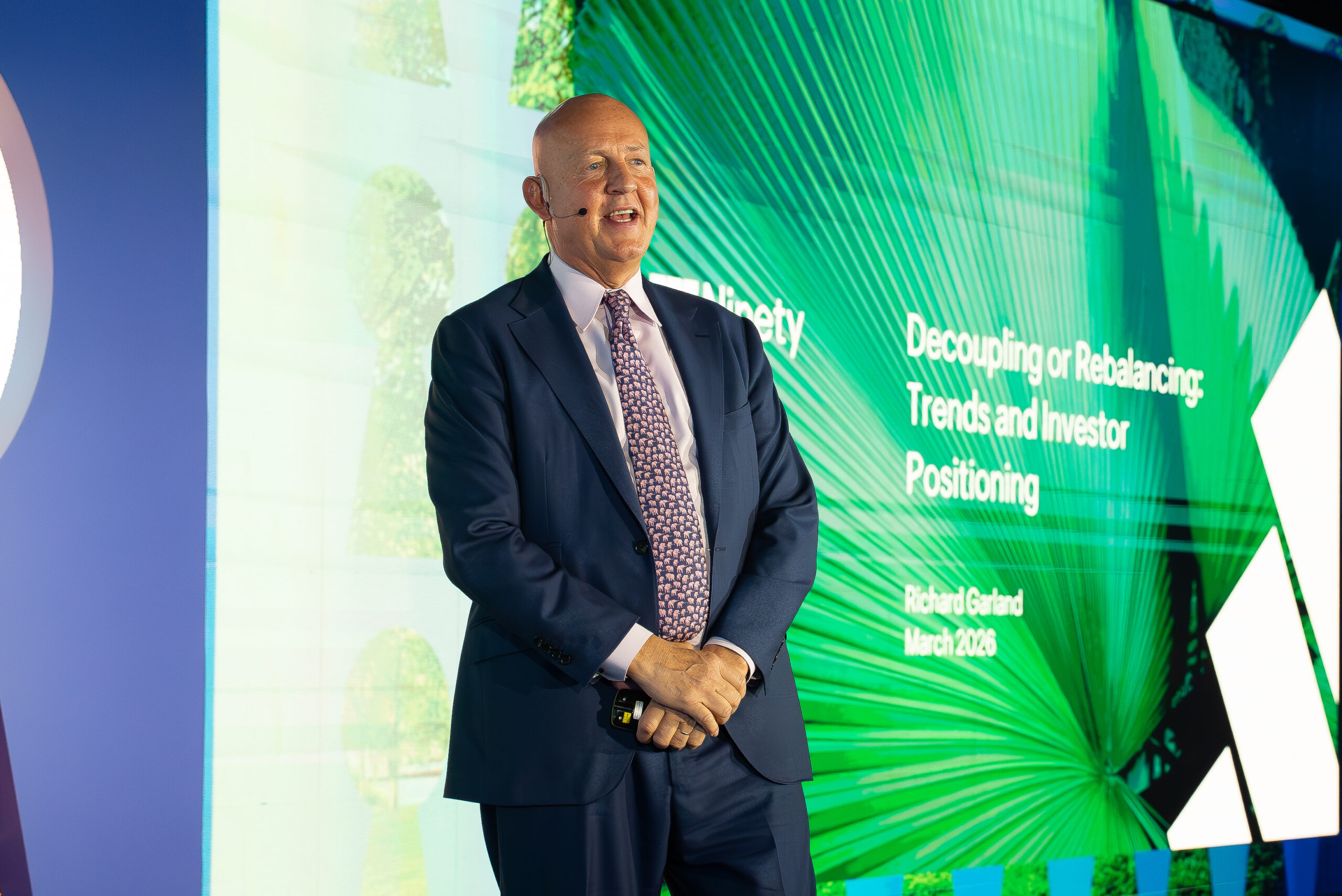
Global markets are navigating a period of heightened uncertainty, driven by geopolitical tensions, shifting economic cycles, and maturing investor behaviour. Speaking at this year’s Glacier by Sanlam’s International Roadshow, Richard Garland, Managing Director, Global Advisor at Ninety One, explained that understanding these dynamics is essential for positioning portfolios effectively in the months ahead.
Recent volatility has been front of mind for investors, particularly following escalating tensions in Iran. Market reactions have been swift and, at times, counterintuitive. Oil prices have surged amid supply concerns, while gold – traditionally viewed as a safe haven – has declined, reflecting its inverse relationship with a strengthening US dollar. This environment has left many investors questioning what comes next and whether instability will persist.
Politics and pressure points
Garland notes that political developments, particularly those involving Donald Trump, remain a central driver of uncertainty. However, he suggests that market fears may be overstating the long-term impact. With US midterm elections looming and rising inflation placing pressure on consumers, there is a strong incentive for policymakers to stabilise conditions. “There are reasons to believe that current geopolitical tensions may not be as prolonged as markets fear,” he explains, pointing to political and economic pressures that could encourage de-escalation.
Beyond geopolitics, structural concerns within equity markets are becoming increasingly evident. One of the most significant is concentration risk. The top 10 companies in the S&P 500 now account for roughly 41% of the index, highlighting the dominance of a small group of large-cap technology stocks. A similar pattern can be observed in global indices such as the MSCI All Country World Index. This concentration raises questions about diversification and the resilience of portfolios in the event of sector-specific downturns.
Valuations also remain elevated, adding another layer of complexity. Sustained market performance will depend heavily on earnings growth, yet rising oil prices and the potential for economic slowdown pose risks to corporate profitability. In this environment, Garland emphasises the importance of careful portfolio construction, particularly as traditional investment styles – such as growth and value – have become increasingly volatile.
Concentration risk and elevated valuations
Institutional investors, he notes, are responding by shifting away from style-based strategies. “Clients are increasingly saying they are tired of style rotation risk,” Garland explains. The frequent and often unpredictable swings between growth and value investing have made it difficult to maintain consistent performance. As a result, many are moving towards core equity strategies that provide more balanced exposure across multiple factors.
This trend is reflected in significant capital flows. Large institutional mandates have been redirected from pure growth or value strategies into more diversified approaches, such as multi-factor investing. The aim is to reduce reliance on any single market style and improve long-term stability. At the same time, global capital is beginning to shift geographically. For more than a decade, the United States has dominated equity market performance, supported by strong earnings growth and the rise of technology-driven sectors, including artificial intelligence. However, signs are emerging that this trend may be turning.
Foreign investors now hold a historically high share of US equities, but recent data indicates increasing interest in opportunities outside the US. International markets – including Europe, Asia and emerging economies – have started to outperform, supported in part by currency movements. A weaker dollar typically benefits commodities and emerging markets, making these regions more attractive to global investors.
“Follow the money,” Garland advises, highlighting the growing flows into commodities, emerging markets and European equities. Commodities are gaining renewed attention, not only due to traditional supply-demand dynamics but also because of their role in supporting the global transition towards digital infrastructure. The expansion of artificial intelligence and data centres requires significant investment in energy, electrification and raw materials, creating long-term demand for natural resources.
Global capital begins to rotate
This structural shift is influencing investment strategies worldwide. Surveys of global fund managers indicate a clear trend: reducing exposure to US equities while increasing allocations to commodities and emerging markets. Although US investors themselves remain heavily invested domestically, international diversification is becoming a more prominent theme.
Another notable change is taking place in the structure of investment vehicles, particularly in the United States. Traditional mutual funds are gradually losing favour, largely due to tax inefficiencies and higher costs. In contrast, exchange-traded funds (ETFs) are experiencing rapid growth, offering lower fees, greater flexibility and improved tax treatment. Passive investing now represents a significant portion of portfolios, with active ETFs also gaining traction.
Staying cautious while seeking opportunity
Garland points out that this shift reflects a broader focus on cost efficiency and transparency. “The power of pricing cannot be underestimated,” he notes, as investors increasingly prioritise value for money alongside performance. Despite these changes, caution remains warranted, especially in areas such as private markets. While alternatives like private equity and private debt have grown in popularity, liquidity constraints and valuation concerns have prompted some investors to reassess their exposure.
Ultimately, the current environment underscores the importance of adaptability. Markets are being shaped by a complex interplay of geopolitical events, economic forces, and structural changes within the investment landscape. For investors, the challenge lies in balancing risk and opportunity while maintaining a long-term perspective.
Garland’s overarching message is clear: while volatility may persist in the short term, it also creates opportunities. By focusing on diversified core strategies, monitoring global capital flows, and remaining responsive to changing conditions, investors can position themselves to navigate uncertainty and capture future growth. As global dynamics continue to change, those who remain informed and flexible will be best placed to succeed in an increasingly complex investment world.
Subscribe to our free newsletter
Stay at the forefront of financial advisory excellence with MoneyMarketing's weekly insights. As a professional adviser, you'll receive carefully curated content that enhances your practice and client relationships without cluttering your inbox. Our commitment to delivering only relevant, actionable intelligence helps you make informed decisions that drive your business forward. Join our community of leading financial professionals today and transform your practice with our complimentary newsletter—because your success is our priority.