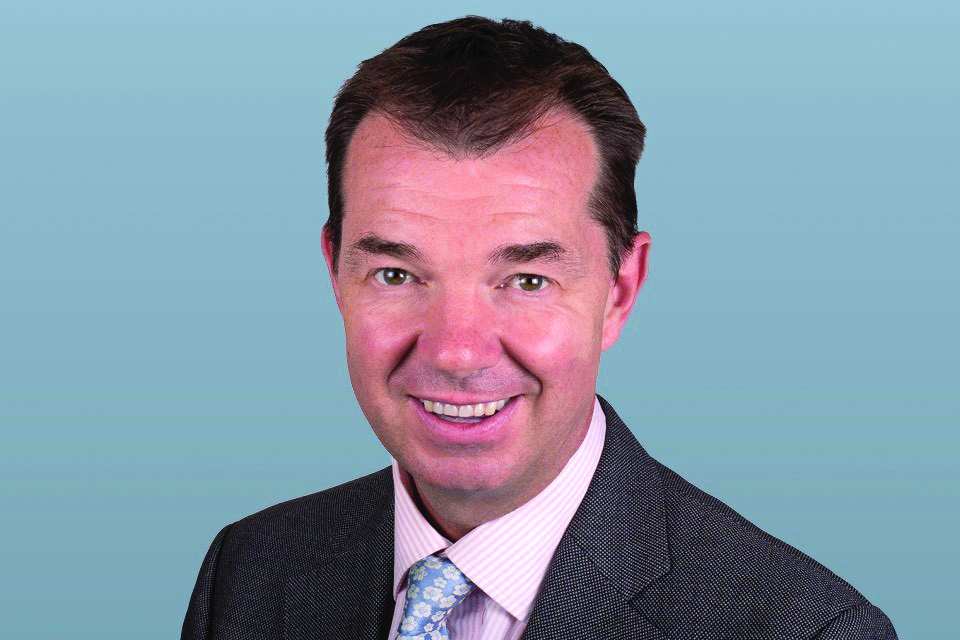
When Guy Opperman was appointed by former UK Prime Minister Theresa May as the world’s first Minister for Financial Inclusion in 2017, he knew the challenge ahead was immense. He was stepping into a role that highlighted one of the greatest challenges facing both developed and emerging economies: how to ensure that everyone, not just the middle and upper-middle classes, can access meaningful financial products and secure their long-term futures. “The UK had nearly 10 million people who didn’t have £100 saved,” he recalls. “And that’s in a country with relatively high financial literacy. The question was: how do you make insurance, savings and pensions accessible to low-income workers, and how do you make it easy?”
Opperman’s dual focus on pensions and financial inclusion reshaped the conversation around financial services, especially in a post-COVID world where technology, accessibility and simplicity are no longer ‘nice-to-haves’ but essential components of long-term resilience.
Tackling the inclusion gap
For Opperman, pensions and inclusion became a “day job and night job” combination: managing a £120bn state pension system alongside a £1.5tn private market, while also pushing to create simple, mobile-based solutions for those excluded from the system entirely.
“The reality is, if it doesn’t work on your mobile phone, particularly for younger and lower-income families, it’s not going to work,” he says. “Education must be bite-sized, accessible and relatable because people are busy, and they don’t have time for hour-long lessons on financial products.”
His efforts included creating community banks to counter payday lenders, promoting workplace auto-enrolment, and designing financial education initiatives that could be rolled out in both government and corporate settings.
One of the biggest challenges governments and employers face today is how to attract, retain, and support older workers in the labour force. In the UK, Guy Opperman says, that has meant tackling both bias and incentives.
He was instrumental in ensuring the UK government created a favourable environment for companies employing people beyond retirement age. Other countries, like Japan and those in Scandinavia, have gone further, either offering pension top-ups for continued work or framing it as a civic duty to keep contributing. “Every government has levers it can pull,” Opperman notes, “but the message is clear: older workers are an asset, not a burden.”
The midlife MOT of wealth, work and wellbeing
One of Opperman’s most talked-about policy innovations during his time in office is the Midlife MOT, a simple but effective check-up for employees aged 45 to 60. Developed with Aviva, the initiative looks at three pillars: wealth, work and wellbeing. “Most people leave it too late to plan for retirement,” he says. “But if you sit someone down at 47 and show them their pension position, explain the lifestyle changes they might face, and give them 20 years to make adjustments, that’s transformational.”
The MOT also tackles retention challenges. “Companies were losing middle managers who wanted early retirement. By offering financial planning, health checks, and retraining opportunities, businesses kept critical experience while employees gained a pathway to stay engaged on their own terms.” The health aspect is particularly powerful. “We used to say: we’re all going to die, but don’t die of negligence. A 10-minute cancer screening at work can save lives and cut healthcare costs. Combine that with flexible working and reskilling, and you’ve got a workforce that stays productive into their 60s and 70s.”
This ties directly into his current work with Smart Pensions, a UK-based firm that runs a multi-employer retirement savings platform and oversees one of the country’s largest master trusts, with more than £5bn under management.
“Smart operates a two-stage business,” he explains. “In the UK, they run workplace pensions. But their real innovation is Keystone, a fintech platform that lets countries and corporates build modern, flexible savings and retirement systems. It’s automated, integrated, and can be adapted for local markets.”
Already live in the UK, UAE and Hong Kong, Keystone is being pitched to African and Middle Eastern markets. Opperman believes this is where the future lies. The global shift away from defined benefit (DB) pensions towards defined contribution (DC) pensions is inevitable. “DB schemes are simply unaffordable in the long run. Longevity is increasing everywhere, and that makes liabilities unquantifiable. As life expectancy rises, final salary pensions become an impossible promise to keep. Every developed country has already moved, or is moving, to DC. Africa, including South Africa, will follow.”
For Opperman, the lesson is clear: governments and corporates that act early in transitioning to DC structures – while ensuring accessibility through simple, mobile-first solutions – will be best positioned to safeguard both retirement security and economic resilience in the decades ahead.
Lessons for South Africa
Opperman sees strong parallels between the UK’s journey and the challenges South Africa now faces. “Australia’s DC pension system has been running for over 30 years. The average retiree there has half a million dollars in private savings. Compare that to South Africa, where too many people still retire with little more than the state safety net, and you can see why the transition to DC is so important.” He also highlights the corporate opportunity. “Employee benefits are no longer just about pensions. Younger workers may want help with housing deposits, cars or education savings. If companies can build flexible savings products into their benefit offering, it’s a win for retention and a win for employees’ long-term security.”
Looking ahead, Opperman is confident. “The world is moving to DC without a shadow of a doubt,” he says. “The state and corporates can’t carry the burden forever. Individuals must take more responsibility for their financial future, but they need the right tools. That means mobile-first, simple, and adaptable platforms.”
Whether through corporate innovation, government regulation or fintech partnerships, the path is clear. As Opperman puts it: “Inclusion and retirement aren’t two separate agendas, they’re one. If you get it right at midlife, you change the outcomes for millions in later life.”
Subscribe to our free newsletter
Stay at the forefront of financial advisory excellence with MoneyMarketing's weekly insights. As a professional adviser, you'll receive carefully curated content that enhances your practice and client relationships without cluttering your inbox. Our commitment to delivering only relevant, actionable intelligence helps you make informed decisions that drive your business forward. Join our community of leading financial professionals today and transform your practice with our complimentary newsletter—because your success is our priority.